

Dlaczego narciarze tak łatwo ulegają poparzeniom słonecznym na stokach? Wyjaśnia to naukowiec zajmujący się śniegiem.
Poniższy tekst pochodzi z The Conversation, oryginalny tekst w języku angielskim znajdziesz pod polskim, maszynowym tłumaczeniem.
Podczas jazdy na nartach lub snowboardzie w wysokich górach bardzo łatwo jest się poparzyć słońcem, ale czy zastanawiałeś się kiedyś, dlaczego tak się dzieje?
Chociaż prawdą jest, że będąc wysoko w górach, jesteś nieco bliżej Słońca, to nie jest to przyczyną.
Jeśli wejdziesz na wysokość 1 mili (1,6 km), czyli mniej więcej odległość od Denver do szczytów ośrodków narciarskich, takich jak Vail lub Copper Mountain, zbliżysz się do Słońca o mniej niż 1 milionową część procenta – to nic. Ponieważ orbita Ziemi jest elipsą, a nie okręgiem, na początku stycznia planeta znajduje się o około 1,7% bliżej Słońca w porównaniu ze średnią roczną. Oznacza to, że narciarze otrzymują w styczniu około 3,3% więcej promieniowania słonecznego niż średnia roczna – więc nie jest to dużo więcej.
Znajdowanie się 1,6 km wyżej oznacza, że atmosfera jest rzadsza, więc jest mniej cząstek blokujących promieniowanie ultrafioletowe, które powoduje oparzenia słoneczne.
Jednak głównym powodem, dla którego Twoja skóra jest bardziej narażona na oparzenia, jest świeży śnieg, którego tak bardzo pragną narciarze i snowboardziści, zwłaszcza w idealne, słoneczne dni. Jestem naukowcem zajmującym się śniegiem na Uniwersytecie Stanowym Kolorado i zapalonym narciarzem. Warunki śniegowe mają wiele wpływów na to, jak bardzo opali się Twoja skóra.
Świeży śnieg ma wysoką zdolność odbijania promieniowania
Kiedy przebywasz na śniegu, duża część promieniowania słonecznego, które dociera do Twojej skóry, jest odbijana przez sam śnieg. Ilość odbijanego promieniowania nazywana jest albedo.
Świeży puchowy śnieg może mieć albedo wynoszące prawie 95%, co oznacza, że odbija prawie całe promieniowanie słoneczne, które na niego pada. Jest znacznie bardziej odblaskowy niż starszy śnieg, który staje się mniej błyszczący. Świeży śnieg ma wiele powierzchni, które odbijają promienie słoneczne. W miarę starzenia się śniegu kryształki śniegu stają się bardziej okrągłe i mają mniej powierzchni odbijających światło.
Duża ilość świeżego śniegu zwiększa albedo, ponieważ słońce przenika przez puch, odbijając się od małych, świeżo opadłych kryształków. Pomyśl o uruchomieniu samochodu po opadach 15 cm świeżego śniegu. Część światła nadal przedostaje się przez pokrytą śniegiem przednią szybę.
Warstwa śniegu o grubości zaledwie 2,5 cm nie jest tak odblaskowa jak świeży śnieg sięgający do kolan. Płytki śnieg jest mniej odblaskowy.
Czym jest albedo?
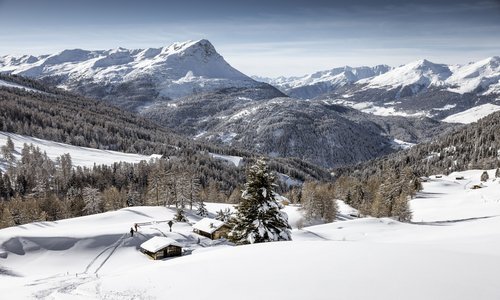
Wiele osób chce jeździć na nartach w tak zwane dni bluebird, kiedy po obfitych opadach śniegu pod czystym, błękitnym niebem leży głęboki, świeży puch. Jednak takie warunki sprzyjają poparzeniom słonecznym z dwóch stron: duża ilość promieni słonecznych padających z góry i wysokie albedo odbijające je od dołu w kierunku twarzy. Chmury blokują światło słoneczne, a tylko około jedna trzecia promieniowania słonecznego przedostaje się przez całkowicie zachmurzone niebo.
Ważna jest również strona góry i Ważne jest również to, gdzie na górze się znajdujesz.
Nachylenie i kierunek, w którym nachylenie jest skierowane, zwany ekspozycją, również wpływają na intensywność promieniowania słonecznego na powierzchni. Nachylenia skierowane na północ na półkuli północnej otrzymują mniej bezpośredniego światła słonecznego w zimie, kiedy słońce znajduje się dalej na południu na niebie, więc pozostają chłodniejsze.
Wiele tras w ośrodkach narciarskich na półkuli północnej jest skierowanych na północ, więc śnieg topnieje wolniej. Śnieg różni się również od szczytu góry do jej podnóża. Wysoko w górach jest więcej śniegu, który topnieje wolniej, więc albedo jest wyższe na szczycie góry niż u podnóża.
Jak zmniejszyć ryzyko poparzeń słonecznych?
Aby uniknąć poparzeń słonecznych, narciarze i snowboardziści muszą wziąć pod uwagę wszystkie te cechy.
Ponieważ promieniowanie słoneczne odbija się z powrotem w górę, osoby przebywające na śniegu powinny nakładać krem z filtrem przeciwsłonecznym na dolną część nosa, okolice uszu i brodę, a także na typowe miejsca.
Większość kremów z filtrem przeciwsłonecznym należy nakładać ponownie co dwie godziny, szczególnie jeśli istnieje ryzyko, że spocisz się, zetrzesz go lub zużyjesz podczas zabawy na stoku. Jednak badania pokazują, że niewiele osób o tym pamięta. Pomocne może być również noszenie odzieży z ochroną UV, która zakrywa jak największą powierzchnię skóry.
Metody te mogą pomóc chronić skórę przed poparzeniami oraz ryzykiem raka i przedwczesnego starzenia się, które się z nimi wiążą. Miłośnicy śniegu muszą pamiętać, że na stokach są narażeni na większe ryzyko poparzeń słonecznych niż to, do czego są przyzwyczajeni.
Autor: Steven R. Fassnacht
Professor of Snow Hydrology, Colorado State University
Przetłumaczono maszynowo z DeepL.com (wersja darmowa)
Ciąg dalszy pod zdjęciami i reklamą
Why do skiers sunburn so easily on the slopes? A snow scientist explains
It’s extremely easy to get sunburned while you’re skiing and snowboarding in the mountains, but have you ever wondered why?
While it’s true that you’re slightly closer to the Sun when you’re high in the mountains, that isn’t the reason.
If you go up 1 mile (1.6 km), about the elevation from Denver to the peaks of resorts such as Vail or Copper Mountain, you’re less than 1 millionth of a percent closer to the Sun – that’s nothing. Since the Earth’s orbit is an ellipse and not a circle, the planet is about 1.7% closer to the Sun in early January compared with its annual average. This means skiers get about 3.3% more Sun in January than average for the year – so, not much more.
Being 1 mile higher up does mean the atmosphere is thinner, so there are fewer particles to block the ultraviolet radiation that causes sunburns.
But the big reason your skin is more likely to burn has to do with all that fresh powder that skiers and snowboarders crave, especially on perfect, blue-sky days. I’m a snow scientist at Colorado State University and an avid skier. There are many ways that snow conditions affect how much your skin will burn.
Fresh snow is very reflective
When you’re out in the snow, a lot of the solar radiation your skin receives is reflected from the snow itself. The amount of radiation reflected is known as albedo.
Fresh powder snow can have an albedo of almost 95%, meaning it reflects almost all of the Sun’s radiation that hits it. It’s much more reflective than older snow, which becomes less shiny. Fresh snow has a lot of surfaces to reflect the Sun’s rays. As snow ages, the snow crystal becomes more round and there are fewer surfaces to reflect light.


Having lots of fresh snow increases albedo because the Sun penetrates into the powder, reflecting off the small, newly fallen crystals. Think about starting a car after 6 inches of fresh snow fell. Some light still makes its way through the snow-covered windshield.
Having only an inch of powder on crust is not as reflective as knee-deep fresh powder. Shallow snow is less reflective.
A lot of people want to ski on what are known as bluebird days, when there is deep, fresh powder under a clear blue sky following a big snow dump. However, this provides the perfect conditions to burn from two directions: lots of Sun coming down from above and high albedo reflecting it back to your face from below. Clouds block sunlight, with only about one-third of the Sun’s radiation making it through a fully overcast sky.
Which side of the mountain also matters
Where you are on the mountain also makes a difference.
The slope and the direction that the slope faces, called aspect, also influences the intensity of the Sun on a surface. North-facing slopes in the Northern Hemisphere get less direct sunlight in the winter, when the Sun is farther south in the sky, so they stay cooler.
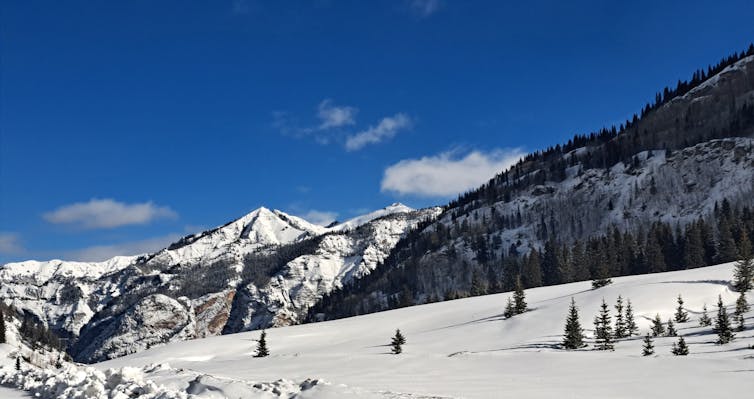
A lot of the runs at Northern Hemisphere ski resorts face north, so the snow melts slower. The snow also varies from the top of the mountain to the base. There is more snow up high, and the snow melts slower there, so the albedo is higher at the top of the mountain than at the base.
How to reduce the risk of sunburn
To avoid sunburns, skiers and snowboarders need to take all of those characteristics into account.
Because solar radiation is reflecting back up, people out in the snow should put sunscreen on the bottom of their noses, around their ears and on their chins, as well as the usual places.
Most sunscreen also needs to be reapplied every two hours, particularly if you’re likely to sweat it off, wipe it off, or wear it off while playing on the slopes. However, surveys show that few people remember to do this. Wearing clothing with UV protection to cover as much skin as possible can also help.
These methods can help protect your skin from burning and the risks of cancer and premature aging that come with it. Snow lovers need to remember that they face higher sunburn risks on the slopes than they might be accustomed to.
Steven R. Fassnacht, Professor of Snow Hydrology, Colorado State University
This article is republished from The Conversation under a Creative Commons license. Read the original article.